Navigate Construction Debris Disposal Long Island
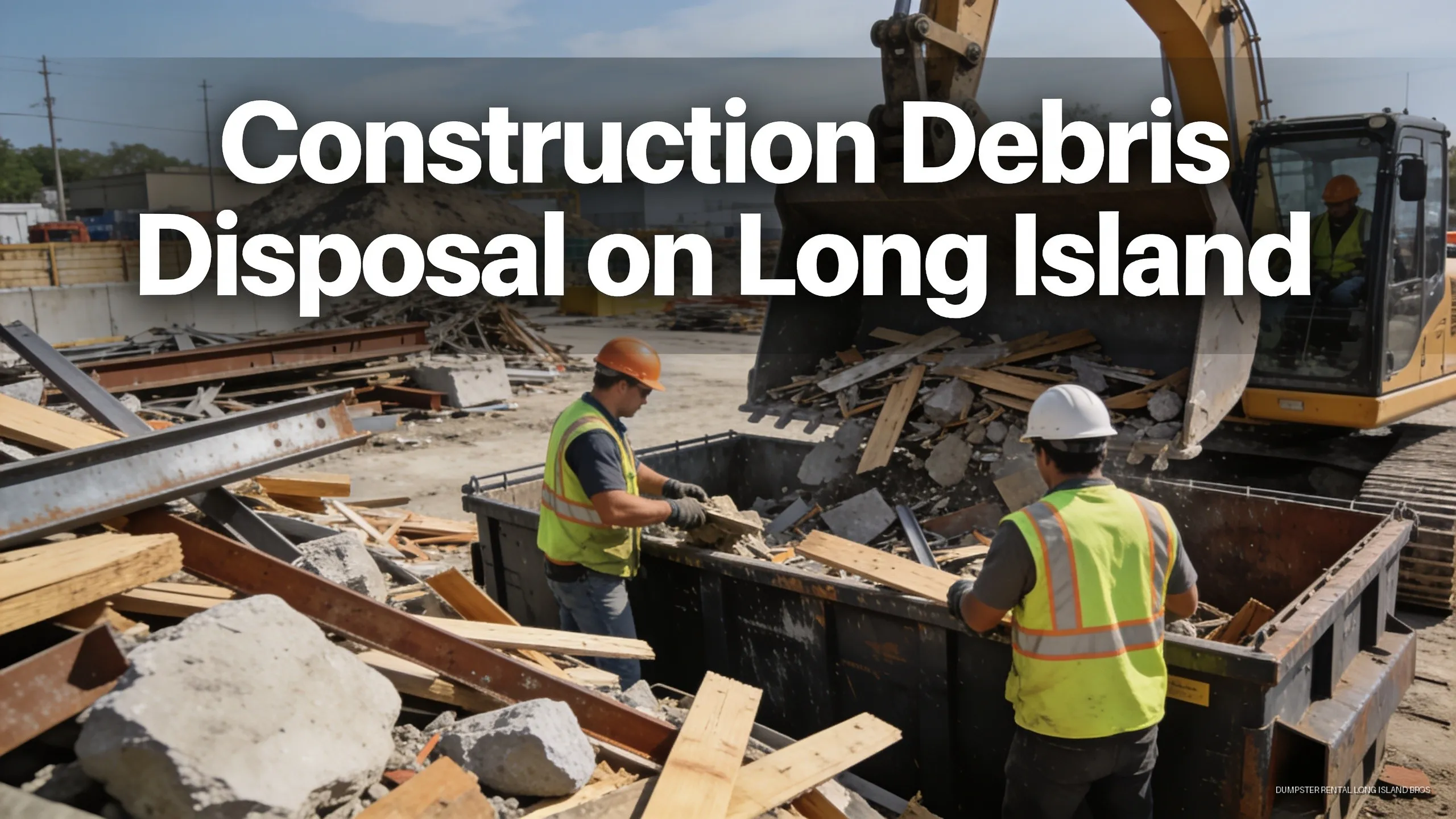
Construction Debris Disposal on Long Island
By Dumpster Rental Long Island Bros Editorial Team · Updated 2026-07-15
Construction debris disposal on Long Island requires routing materials through a licensed Construction. Demolition Debris Handling and Recovery Facility (CDDHRF). Accepts uncontaminated waste like concrete, brick, wood, wallboard, roofing shingles, and asphalt sidewalk. Hiring a local debris removal service or renting a dumpster streamlines the process, ensuring compliant haul-away of renovation and demolition materials. New York State construction and demolition waste rules increasingly call for documented recycling and diversion efforts on active job sites, making proper routing a compliance requirement rather than an optional courtesy.
Construction debris disposal on Long Island involves selecting the appropriate container size from available options. 10, 20, 30, or 40 yard — for projects across Nassau and Suffolk counties. Dumpster Rental Long Island Bros serves both counties, helping contractors. Property owners select roll-off dumpsters sized to actual debris dimensions while staying compliant with Waste Disposal Regulations for Safer Long Island Projects. Working with a provider that understands Nassau and Suffolk County ordinances reduces the risk of fines, rejected loads, and project delays.
Key Takeaways
Construction & demolition debris handling recovery facilities receive uncontaminated C&D debris from construction, remodeling, repair, and demolition projects.
Long Island dumpster services offer 339K+ verified reviews for fast and reliable debris removal throughout the region.
Debris pickup services provide quick haul away solutions for junk accumulation taking up residential and commercial space.
Easy upfront online pricing enables customers to select custom quote options for construction debris disposal needs.
Construction & demolition debris handling recovery facilities receive uncontaminated C&D debris from construction, remodeling, repair, and demolition projects.
Long Island dumpster services offer 339K+ verified reviews for fast and reliable debris removal throughout the region.
Debris pickup services provide quick haul away solutions for junk accumulation taking up residential and commercial space.
Easy upfront online pricing enables customers to select custom quote options for construction debris disposal needs.
Preparing for Construction Debris Disposal
Proper preparation determines whether a Construction Dumpster Rental Service Tips for Long Island project runs smoothly or stalls before the first load leaves the site. Gathering the right information before renting a container saves time, prevents costly sizing errors. Keeps Long Island job sites compliant with local regulations.
Materials That Count as Construction Debris
Construction Debris Disposal Guidelines begin with identifying what materials fall under the category. On Long Island, construction and demolition debris includes concrete, brick, soil, wood, wallboard, tile, carpeting, roofing shingles, and asphalt sidewalk. Knowing the exact material mix matters because different waste streams affect container selection and disposal routing.
Estimating the Right Dumpster Size
Accurate waste volume calculation is the single most important prerequisite. Underestimating leads to overfilled containers, overage fees, and unsafe job sites. Rental specialists at Dumpster Rental Long Island Bros guide clients through calculating the total amount of waste planned for removal, then match that figure to the appropriate container size.
Follow these steps before contacting a rental provider:
Catalog every debris type present on the Long Island project site — list concrete, wood, tile, and other materials separately.
Estimate the volume of each material category in cubic yards.
Total the combined volume to establish a baseline container size requirement.
Note site access constraints — driveway width, overhead clearance, and surface type all affect placement.
Confirm local requirements — Dumpster Rental Long Island Bros serves both Suffolk and Nassau counties and maintains current knowledge of all local laws and dumping limitations, ensuring clients select compliant disposal options from the start.
Catalog every debris type present on the Long Island project site — list concrete, wood, tile, and other materials separately.
Estimate the volume of each material category in cubic yards.
Total the combined volume to establish a baseline container size requirement.
Note site access constraints — driveway width, overhead clearance, and surface type all affect placement.
Confirm local requirements — Dumpster Rental Long Island Bros serves both Suffolk and Nassau counties and maintains current knowledge of all local laws and dumping limitations, ensuring clients select compliant disposal options from the start.
Classifying and Sorting Construction Debris
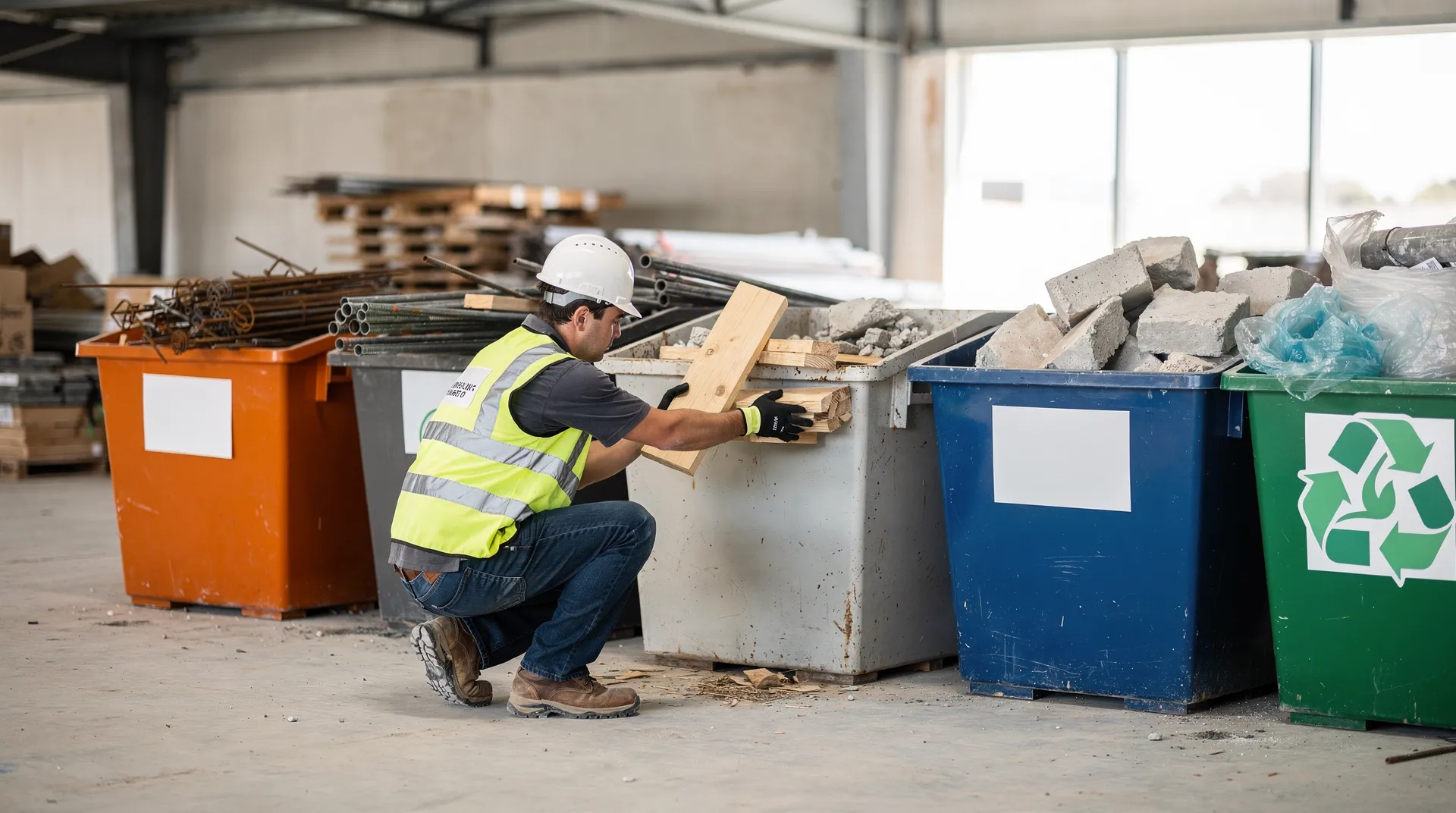
Proper classification of construction debris begins with separating Construction Debris Disposal Guidelines-compliant materials from waste streams that fall outside regulated C&D categories. A construction and demolition debris handling and recovery facility accepts only uncontaminated C&D debris. Materials generated from construction, remodeling, repair, or demolition of structures, buildings, and roads.
Materials That Count as C&D Debris
Accepted C&D debris includes materials such as concrete, brick, soil, wood, wallboard, tile, carpeting, roofing shingles, and asphalt sidewalk. These materials must remain uncontaminated to qualify for processing at a handling and recovery facility. Contaminated loads are rejected outright, which delays Long Island projects and adds disposal costs.
Municipal Solid Waste Does Not Belong in a C&D Dumpster
Municipal solid waste does not qualify as C&D debris, even when generated during construction or demolition activities. Mixing household-type waste into a C&D container creates a non-compliant load. Long Island contractors who mix waste streams risk facility rejection and additional haul-back fees.
Follow these steps to sort debris correctly on any Long Island job site:
Identify the debris source — confirm materials come from construction, remodeling, repair, or demolition work.
Separate by material type — group concrete, wood, metal, and masonry into distinct areas before loading.
Remove municipal solid waste — pull out food waste, packaging, and other non-C&D materials before the container is filled.
Flag reusable items — Dumpster Rental Long Island Bros emphasizes responsible disposal practices, ensuring reusable items are not unnecessarily discarded before a specialist reviews the load.
Confirm the load is uncontaminated — conduct a final visual check before requesting pickup.
Identify the debris source — confirm materials come from construction, remodeling, repair, or demolition work.
Separate by material type — group concrete, wood, metal, and masonry into distinct areas before loading.
Remove municipal solid waste — pull out food waste, packaging, and other non-C&D materials before the container is filled.
Flag reusable items — Dumpster Rental Long Island Bros emphasizes responsible disposal practices, ensuring reusable items are not unnecessarily discarded before a specialist reviews the load.
Confirm the load is uncontaminated — conduct a final visual check before requesting pickup.
Choosing the Right Dumpster Size
Choosing the Construction Dumpster Sizes | Dumpster Rental Long Island that fits your project starts with accurately estimating the volume of debris a project will generate. Dumpster Rental Long Island Bros offers four container sizes — 10, 20, 30, and 40 yard. Designed to cover the full spectrum of residential, commercial, and construction needs across Long Island.
Container Sizes Available for Long Island Projects
The four available sizes address distinctly different project scales:
10-yard container — suited for small cleanouts, minor bathroom remodels, or limited landscaping debris
20-yard container — appropriate for mid-size renovation projects, flooring removal, or garage cleanouts
30-yard container — designed for larger construction jobs, full room additions, or significant structural demolition
40-yard container — the largest option, built for major commercial projects or high-volume construction debris disposal
10-yard container — suited for small cleanouts, minor bathroom remodels, or limited landscaping debris
20-yard container — appropriate for mid-size renovation projects, flooring removal, or garage cleanouts
30-yard container — designed for larger construction jobs, full room additions, or significant structural demolition
40-yard container — the largest option, built for major commercial projects or high-volume construction debris disposal
Selecting a container that is too small forces multiple hauls, which increases both cost and project downtime. Sizing up from the start is almost always the more efficient decision.
Estimating the Right Size Before Renting
Dumpster Rental Long Island Bros provides an online calculator that helps clients estimate the appropriate container size before committing to a rental. Clients enter project details, and the tool returns a recommended size based on expected waste volume.
Follow these steps to size a container correctly:
Catalog all debris types — list every material the project will generate, from concrete and drywall to roofing shingles.
Use the online calculator — input project dimensions and material types to receive a size recommendation.
Consult a rental specialist — trained specialists calculate expected waste dimensions and advise on safe container placement specific to the Long Island property.
Confirm delivery logistics — coordinate access, surface conditions, and pickup scheduling before finalizing the order.
Catalog all debris types — list every material the project will generate, from concrete and drywall to roofing shingles.
Use the online calculator — input project dimensions and material types to receive a size recommendation.
Consult a rental specialist — trained specialists calculate expected waste dimensions and advise on safe container placement specific to the Long Island property.
Confirm delivery logistics — coordinate access, surface conditions, and pickup scheduling before finalizing the order.
Trained rental specialists bring hands-on expertise to every sizing conversation, ensuring clients across Nassau. Suffolk counties receive a container matched precisely to their project scope.
Scheduling Delivery and Managing the Site
Scheduling a dumpster delivery on Long Island starts with contacting Dumpster Rental Long Island Bros and providing project specifications. Rental specialists then coordinate delivery and pickup logistics to align with each client’s timeline. Site constraints, ensuring the container arrives when and where the project demands.
Follow these steps to schedule delivery and manage the site effectively:
Submit project details — Use the online contact form or phone line to describe the project scope, waste type, and preferred delivery window.
Confirm container placement — Work with a specialist to identify a safe, accessible drop location on the Long Island property, accounting for driveway clearance and local access regulations.
Receive the right-sized container — Specialists right-size the container based on calculated waste volume, reducing the risk of overage fees or mid-project swaps.
Load the container correctly — Follow the loading guidance provided by the rental team to distribute weight evenly and keep debris within the container’s fill line.
Schedule pickup — Coordinate the pickup date in advance so the container clears the site before the next project phase begins.
Submit project details — Use the online contact form or phone line to describe the project scope, waste type, and preferred delivery window.
Confirm container placement — Work with a specialist to identify a safe, accessible drop location on the Long Island property, accounting for driveway clearance and local access regulations.
Receive the right-sized container — Specialists right-size the container based on calculated waste volume, reducing the risk of overage fees or mid-project swaps.
Load the container correctly — Follow the loading guidance provided by the rental team to distribute weight evenly and keep debris within the container’s fill line.
Schedule pickup — Coordinate the pickup date in advance so the container clears the site before the next project phase begins.
Why Right-Sizing the Container Matters
Choosing the wrong container size creates two costly problems: overage charges when debris exceeds capacity. Unnecessary costs for renting a larger container than needed. By right-sizing containers and advising on loading approaches, Dumpster Rental Long Island Bros helps clients avoid overage issues. Maintain safer, cleaner job sites throughout Nassau and Suffolk counties.
Debris Types Long Island Removal Services Handle
Long Island debris removal services manage the full scope of site waste. Trained teams handle heavy lifting, item loading, transport, and proper disposal. Covering yard waste, renovation debris, and construction debris in a single, coordinated service.
Long Island Waste Disposal Regulations and Compliance
Waste rules on Long Island are set and enforced by several overlapping authorities, and understanding them protects contractors and property owners from fines, rejected loads, and project delays. Nassau County sets rules for residential and commercial waste and runs active recycling programs to reduce landfill impact, while Suffolk County enforces detailed procedures for hazardous materials and special collections. Many towns and villages add their own ordinances on top of county rules — covering dumpster placement, allowable waste types, and collection schedules — so requirements can vary from one Long Island community to the next.
Sustainability has also become an operational priority across the region. New York State construction and demolition waste regulations increasingly require documented recycling and diversion efforts on active job sites, meaning responsible disposal is now an enforceable standard rather than a discretionary choice. Segregating recyclable materials such as concrete, wood, and metal from general debris, and routing loads to a licensed handling and recovery facility, supports compliance while often lowering disposal costs.
Dumpster Rental Long Island Bros maintains current knowledge of Nassau and Suffolk County ordinances and helps clients navigate permitting, allowable waste types, and disposal routing before a container ever reaches the property. Choosing a rental partner with local regulatory experience is one of the most effective ways to keep a Long Island project compliant from delivery through final pickup.
Common Mistakes Long Island Contractors Should Avoid
Long Island contractors most commonly derail construction debris disposal projects by overlooking clear contract terms. Skipping proper facility routing for recovered materials. Failing to address these two areas early causes unexpected charges. Compliance gaps that slow down active job sites across Nassau and Suffolk counties.
Why Hidden Costs Catch Contractors Off Guard
Unclear rental agreements are a leading source of budget overruns on Long Island job sites. Dumpster Rental Long Island Bros structures every engagement around Construction Debris Disposal Guidelines. Providing guided container selection and written terms with no hidden costs. Contractors who skip this step often discover overage fees or undisclosed surcharges only after the project wraps. Requesting a fully itemized quote before any debris hits the container eliminates that risk entirely.
The Risk of Routing Debris to the Wrong Facility
Construction and demolition debris handling and recovery facilities serve a specific purpose. A properly designated facility stores incoming waste, processes it to extract recyclable or reusable materials. Manages recovered stock — or performs any combination of those activities. Contractors who mix uncontaminated C&D debris with general waste lose the opportunity to divert recyclable concrete, wood. Roofing materials from landfills, and may face additional disposal costs.
To avoid the most common errors, Long Island contractors should follow these steps in order:
Gather project specifications — document debris type, estimated volume, and site access constraints before contacting a rental provider.
Request a written quote — Dumpster Rental Long Island Bros responds to inquiries submitted through its online contact form or phone line within one business day.
Confirm facility routing — verify that the selected provider directs C&D debris to an appropriate handling and recovery facility.
Review all terms — confirm no hidden costs appear before signing any rental agreement.
Gather project specifications — document debris type, estimated volume, and site access constraints before contacting a rental provider.
Request a written quote — Dumpster Rental Long Island Bros responds to inquiries submitted through its online contact form or phone line within one business day.
Confirm facility routing — verify that the selected provider directs C&D debris to an appropriate handling and recovery facility.
Review all terms — confirm no hidden costs appear before signing any rental agreement.
Construction debris disposal on Long Island requires a strategic approach that balances efficiency with regulatory compliance. By selecting the right container size, understanding local regulations. Partnering with a reliable waste management provider, contractors and property managers streamline their operations while maintaining clean, safe job sites. Proper planning transforms debris management from a logistical burden into a straightforward component of project success, allowing teams to focus on what matters most: completing quality work on schedule.
FAQ
What materials count as construction debris on Long Island?
Accepted materials include concrete, brick, soil, wood, wallboard, tile, carpeting, roofing shingles. Asphalt sidewalk — all routed through a licensed Construction and Demolition Debris Handling and Recovery Facility.
What dumpster sizes are available for Long Island construction projects?
Dumpster Rental Long Island Bros offers 10, 20, 30. 40 yard roll-off containers, serving both Nassau and Suffolk counties for renovation and demolition projects.
How do you choose the right dumpster size for a project?
Catalog every debris type, estimate each material’s volume in cubic yards, total the combined volume. Note site access constraints before contacting a rental provider.
How much does it cost to rent a dumpster for construction debris on Long Island?
Costs vary based on container size, debris type, and rental duration, but Dumpster Rental Long Island Bros provides itemized quotes with no hidden costs after reviewing project specifics. Suffolk and Nassau County customers receive pricing matched to their site access and expected waste volume before any container is delivered.
Do you need a permit to place a dumpster on your property in Nassau or Suffolk County?
Permit needs depend on where the container sits — placement on a public street or right-of-way typically requires a municipal permit, while driveway placement usually does not. Rental specialists at Dumpster Rental Long Island Bros are familiar with local ordinances across Long Island and can advise on any permit required before delivery.
How long can you keep a rented dumpster on a Long Island job site?
Rental periods are flexible, ranging from a few days for a small cleanout to several weeks or a long-term placement for an ongoing construction project. Dumpster Rental Long Island Bros coordinates delivery and pickup schedules around each Long Island project’s timeline to help avoid unnecessary extension fees.