Long Island Dumpster Rental Compliance Guide
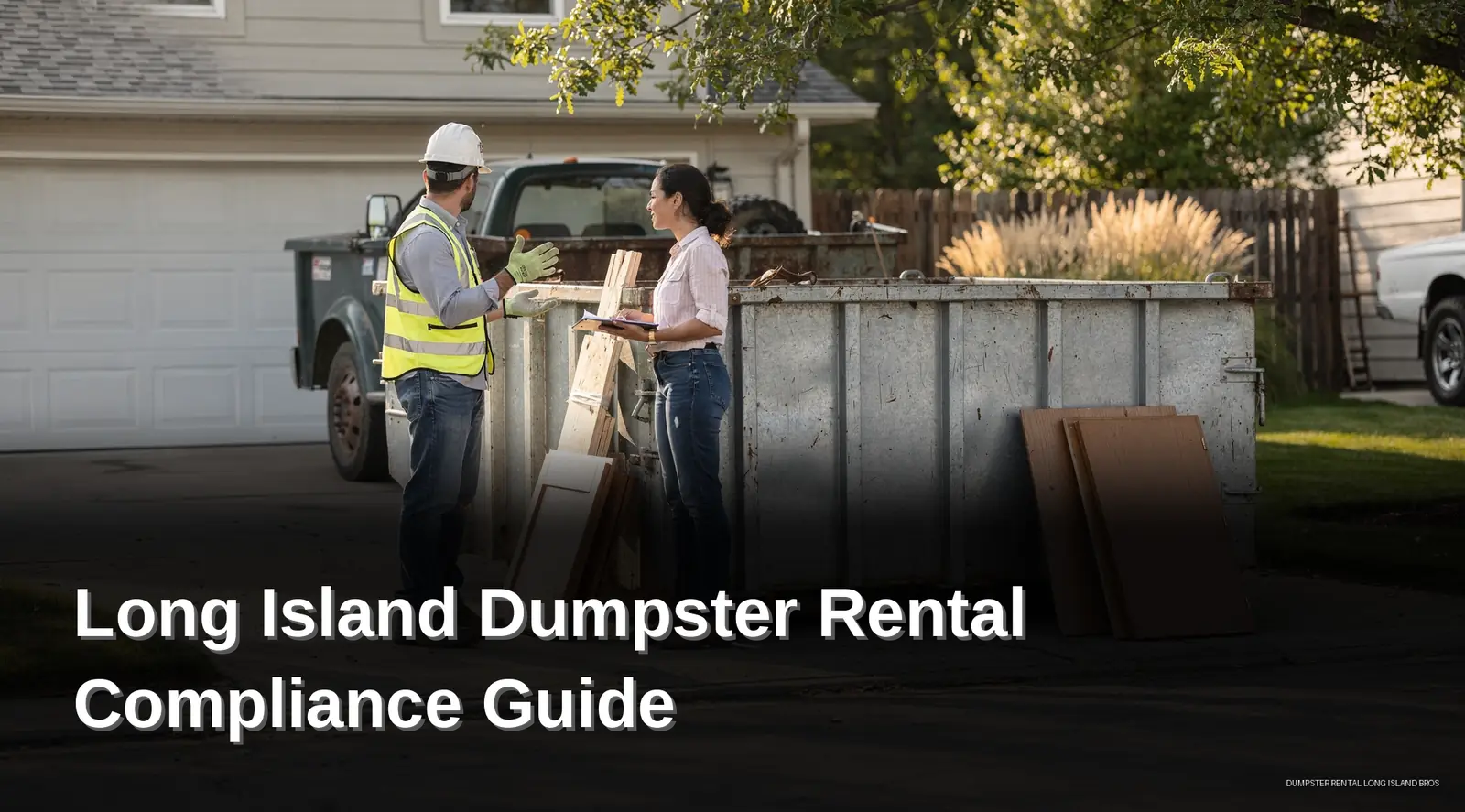
Long Island Dumpster Rental Compliance Guide
By Dumpster Rental Long Island Bros Editorial Team · Updated 2026-08-03
When scheduling a dumpster rental on Long Island, understanding the local regulations that govern dumpster placement and waste disposal is essential to ensure compliance and avoid delays or fines. Nassau and Suffolk counties each have specific rules regarding permits and placement that affect both homeowners and contractors.
Permit requirements largely depend on where the dumpster will be placed. Typically, dumpsters positioned on private property such as driveways or side yards do not require a permit. However, if the container will occupy public spaces like streets, sidewalks, or alleys, local permits from the municipality must be obtained in advance. Rental specialists at Dumpster Rental Long Island Bros help customers navigate these requirements, tailoring recommendations for Nassau and Suffolk county regulations.
Key Takeaways
Dumpster permit requirements vary depending on the placement location and specific borough or county rules within Long Island.
Roll-off dumpsters placed on public streets, sidewalks, or right-of-ways require official permits before delivery and setup.
Residential properties in Nassau and Suffolk counties may have differing requirements based on location and dumpster size.
Contacting local municipal offices confirms the necessary permits and application processes to maintain compliance.
Dumpster permit requirements vary depending on the placement location and specific borough or county rules within Long Island.
Roll-off dumpsters placed on public streets, sidewalks, or right-of-ways require official permits before delivery and setup.
Residential properties in Nassau and Suffolk counties may have differing requirements based on location and dumpster size.
Contacting local municipal offices confirms the necessary permits and application processes to maintain compliance.
Essential Information Before Renting a Dumpster on Long Island
For first-time renters in Nassau or Suffolk counties, grasping local waste disposal and permit requirements is critical before arranging delivery. Overlooking these details can lead to project delays, fines, or rejected disposal of prohibited materials. Both counties enforce regulations that control debris disposal, truck access during delivery, and overall environmental stewardship objectives.
Managing a renovation or cleanout alongside navigating municipal codes is challenging. Partnering with a rental specialist familiar with Long Island’s local laws and landfill restrictions simplifies the process. The team at Dumpster Rental Long Island Bros has extensive experience in the region, helping customers comply with county-specific rules and avoid violations before they occur.
Dumpster Permits on Long Island: What You Need to Know
A dumpster permit is an official authorization required to place a roll-off container in designated public areas such as streets, alleys, or sidewalks. If the dumpster is set entirely on private property, like a driveway or backyard, permits are typically not required. Confirming the exact placement location before booking your rental prevents potential disruptions.
Important Considerations Before Dumpster Delivery
Determine the exact spot for the container: private driveway, yard, or public street/curbside.
Inquire about any size or type restrictions for dumpsters in your area.
Verify which materials are prohibited from disposal under local waste management rules.
Ensure the rental specialist is familiar with Nassau or Suffolk county regulations.
Determine the exact spot for the container: private driveway, yard, or public street/curbside.
Inquire about any size or type restrictions for dumpsters in your area.
Verify which materials are prohibited from disposal under local waste management rules.
Ensure the rental specialist is familiar with Nassau or Suffolk county regulations.
Addressing these factors before delivery reduces risks and helps projects proceed smoothly and in compliance.
Legal Dumpster Placement Locations in Nassau and Suffolk Counties
Local municipalities throughout Nassau and Suffolk counties differentiate clearly between private property and public right-of-way when it comes to dumpster placement. This distinction determines whether a permit application is necessary before delivery.
Driveway Dumpster Placement and Permit Regulations
If the dumpster is placed entirely on private property, such as a driveway, side yard, or private lot, generally no permit is required. This makes private property placement the easiest and quickest option for most residential renovations or cleanouts, allowing for delivery without waiting on municipal approvals.
Dumpster Placement on Public Streets and Required Permits
Dumpsters located on streets, alleys, sidewalks, or other public rights-of-way require a permit from the local municipality. Contractors and homeowners in areas with limited driveway space should plan ahead to obtain necessary permits, as municipal processing can add time to project schedules.
Before scheduling delivery, consider the following details:
Private property placement (driveway, yard, private lot): typically does not require a permit.
Public right-of-way placement (street, alley, sidewalk): legal permits are required from the corresponding municipality.
Access challenges: narrow or crowded properties may necessitate public placement, triggering permit and scheduling considerations.
Project timing: obtaining permits requires lead time; early planning is recommended.
Private property placement (driveway, yard, private lot): typically does not require a permit.
Public right-of-way placement (street, alley, sidewalk): legal permits are required from the corresponding municipality.
Access challenges: narrow or crowded properties may necessitate public placement, triggering permit and scheduling considerations.
Project timing: obtaining permits requires lead time; early planning is recommended.
Adhering to Long Island dumpster rental compliance safeguards projects against fines, logistical delays, and supports environmentally responsible disposal practices. Confirming requirements with the local building or public works office prior to delivery will ensure clarity and compliance.
Frequently Asked Questions
Do I need a permit to rent a dumpster on Long Island?
Permit necessities depend on your dumpster’s placement. Containers on private property typically do not require a permit, while those placed on public streets or rights-of-way must have an approved permit from the local municipality.
What should I confirm before scheduling a dumpster delivery?
Always clarify where the dumpster will be placed, check for any size or type restrictions for that location, review prohibited disposal materials, and ensure your rental specialist understands Nassau or Suffolk county regulations to maintain compliance.
Are permit rules the same for Nassau and Suffolk counties?
No, Nassau and Suffolk counties have different permit guidelines. Rental specialists at Dumpster Rental Long Island Bros help confirm local placement rules and guide customers to meet all county-specific requirements.
How long does it typically take to obtain a dumpster permit in Long Island towns?
Permit processing times vary by municipality on Long Island but generally range from a few days to a couple of weeks. Planning ahead and working with experienced rental services can help expedite this process and prevent delivery delays.
Can I place a dumpster in front of my Long Island home without a permit?
In most Nassau and Suffolk county towns, placing a dumpster on private property such as a driveway does not require a permit. However, placing a dumpster on public streets or sidewalks in front of your home will require obtaining a permit from your town or city government.
What materials are commonly prohibited in dumpster rentals across Long Island?
Local regulations often prohibit hazardous materials, electronics, certain chemicals, and tires from dumpster disposal. Your rental provider in Long Island will inform you of specific material restrictions to ensure compliance with Nassau and Suffolk county waste management rules.